
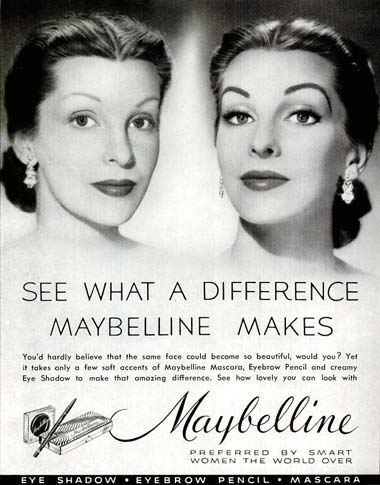
However, this mass market industry did change views of women from nineteenth century distinct images of mother and daughter, elite and working class, and decent and corrupt. Cosmetics transformed how women should want to look: young and attractive no matter the age. Heavier eye makeup also started to become less criticized or associated with prostitutes and societal Jezebels but rather reminded ladies that they were constantly on display and were able to transform their appearance as a natural right. This challenged the earlier perceptive of paints as deceitful but as a personal metamorphosis applicable from the ordinary factory girl to a high status fashionable lady.
Cosmetics industries continued to encourage individuality with a large gamut of different products and "guided" women to discover and personalize their own nature with Armand's chart of thirty two "distinct" types of women (most of the differences between the women were skin or hair color, but facial features were indistinguishable). Modern marketing strategies built on the different beauties of varying ethnicities and often combined different cultures into one face, defining the face of America's diverse population while excluding African Americans. However, many still believed America's face should be white but tanning became more widespread and popular. This was viewed as one of the many options for women's skin and just another choice though and therefore established white supremacy and racial prejudice.

Widespread acceptance for paints deemed it the term glamour instead, a more positive connotation, but too much "glamour" was equitable to low social standings as cosmetics were apparently to make one look more "naturally attractive" ironically. Looking "natural" in this era required a box of foundation, rogue, lipstick, eyebrow darkeners... etc. however and manufacturers began training women's eyes to see cosmetics as natural. However, these products, especially lipstick, were seen as controversial because the bourgeois continued to link it with sex, and makeup application in public revealed the illusion behind the appearance so marketers began delineating time periods for certain makeups (sensible during the day, exotic at night). As cosmetics began to insert itself more into women's lives, advertisements, particularly radio broad castings, claimed that a woman's mental health and femininity relied heavily on their appearance and a blemished complexion will cause passed opportunities and misfortune. This reinforced the idea that all women had similar goals and united them in a democratic movement of consumerism and beautification, proclaiming the New Woman.

The cult of manliness in the late nineteenth century prevented much industry for males as cosmetics were seen as effeminate and associated with homosexuality. However, as women increasingly purchased cosmetics, men began to discreetly apply face powders or concealers in the safety of their restrooms, and sales for men ordering beauty sales sporadically increased with the development of the mass market. Shaving was one of the first items to be socially accepted as it was advertised as a tool for hygiene and promised more economic and social opportunities as ads played to racist men's prejudices and desires to separate themselves from other ethnicities. Many manufacturers attempted to make cosmetics manly or give them a new name, like talcum powder which was to be used after shaving but was very similar to women's loose face powder. Men's insecurities eventually prohibited the popularity that came with cosmetics for women though several industries made ambitious tries to incorporate men into the expansive fold of cosmetics.

Questions:
Besides the fear of turning "feminine", what were other reasons for men to be insecure about using cosmetics?
What were some legitimate reasons for the consequences of the social revolution women experienced after the Victorian era the cosmetics industry took credit for?

No comments:
Post a Comment