
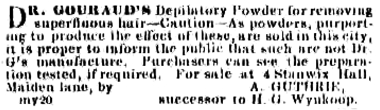
The useage of cosmetics by men gradully changed over time with the political alterations from the 18th to 19th century as lotions. paints.. etc. that were previously valued and adorned to show elitism became denounced during the American Revolution to show a severance from the aristocracy and a sense of duty to the new democracy. Men began to see cosmetics as unmasculine and a coverup from the truth but continued to utilize a few products related to hair and shaving. Later on, women were also encouraged to abstain from cosmetic products but rather apply "moral" cosmetics to maintain innocence and virtue, relflecting the physiognomic principle that inner beauty was reflected in the outwardly appearance. In addition, ettiquette books sold in this period motivated self control and sexual purity rather than concealment of the face through paints and enamels which were particuarly influenced by the middle class cutural standards.

However, the rising feminine ideal of untouched, pure faces did not curb the earlier perspectives of women as corrupt and decietful with the help of paints and cosmetics. Women who used them were associated with prostitutes and deemed as "Jezebels" as a bad example for women. This view mostly came from the middle class who were trying to separate themselves from the seemingly corrput higher class who were "all art and no substance" (pg 27). The fashionable ladies would attend enameller studios and expose themselves to harmful chemicals in order to retain a lovlier outwardly appearance, signifying female degradation (especially amont prostitutes). These painted women supposedly invited sexual encounters while simple and pure self-presentation indicated sexual purity and social respectability, which was prefered by the middle class taste.

Cosmetics and paints also extablished racism and white supremacy as a white complexion was considered most beautiful and justified the inferiority of other races. Also, the rise of photography led to more demands of photoshopping the images of enhancing facial features and leaving out blemishes for those who were self conscious, but led to criticisms demouncing the untruthfulness of the business. African Americans were the total opposites of these aesthetic standards set by whites and were denied social and political participation as a result. Black women were abused by their mistresses when they attempted to beautify themselves and by white men who were more subject to sexually abuse them. The white population used this ideology of inferiority as fear of losing their pale complexion and lowering their status (the worst case scenario is tanning), and racist warnings against chemical induced cosmetics spread, depiciting the conditions of the Jim Crow laws.

Questions:
Was the desire for an untouched complexion more significant before or after the growth in cosmetic consumerism?
How would feminists in the progressive era react to the increasingly frequent uses of cosmetics by women during this time period?

No comments:
Post a Comment